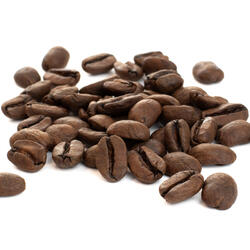


Cookies Decaf – Flavored Roasted Coffee

Caffeine-free, but packed with cookies! This cookie-flavored arabica will appeal to any lover of sweet coffee. The flavor is full of milk, chocolate, and vanilla. The base is a premium Brazilian decaf with a rich, balanced and silky taste that has a hint of nuts and chocolate. The flavor is added pre-roasting and adds the delicious notes of crunchy chocolate cookies. Give it a try!
Shipping methods
| Nizozemská pošta HD - zásilkovna | Delivered by 22. 10. | 1,00 € |
|---|---|---|
 DHL DHL |
Delivered by 22. 10. | 4,90 € |


Ingredients
100 % Arabica, Natural aromaTaste & Crema
Cookie Decaf is based on Minas Swiss Water Decaf Arabica from Brazil, you will recognize chocolate and nuts in its taste. Enjoy its balance and smoothness, and be delighted by a long aftertaste. Thanks to its natural flavoring, it has gained something extra – the taste of crunchy chocolate cookies.
Origins

Brazilian coffee is one of the classics that never gets old. We will add that cookies are one of its very successful variations. Before moving on to how decaffeinated and flavored coffee is made, we will stop in the Sul de Minas region. The hilly region, famous for its coffee plantations, is found in southern Brazil, covering 70% of the Sul de Minas area.
The vast majority are bourbon coffee plants (Coffea arabica). The yields are low, but it has exceptional taste. Brazilians have been growing bourbon since the end of the 19th century, and it thrives best at altitudes above 1,100m. This is also why much of the bourbon production is labelled SHG (Strictly High Grown). The flavor of each coffee variety is influenced by the composition of the soil, its nutrient content, the location of the plantation, the rainfall, and the length and strength of the sunshine. In this respect, the Sul de Minas region has excellent conditions for growing the bourbon variety.
Coffee cherries are harvested in Sul de Minas from June to September. The workers process them by washing them, which means using water. They pour the fruit into water tanks where they mechanically remove the top skin, then wash it and leave it to ferment. The coffee beans are released from their mucilage during the natural fermentation process. The green beans then need to be well-dried. They must undergo further processing if they are to be decaffeinated. In this case, a certified Swiss Water process was used. In this process, the coffee is steeped in circulating hot water for 10 hours, which helps to leach out the caffeine gradually. It is captured by activated carbon filters.
The result is a coffee containing less than 0.1% caffeine. The advantage of this relatively labor-intensive and expensive technology is that it uses no chemical agents and is very gentle on the coffee's unique aroma. The coffee processed this way is dried again, then "rests" in bags for some time. Once the experts know it can be roasted, the next alchemy comes into play. If the coffee is to be perfectly roasted and flavored, a carrier oil with aromatic substances must be worked with. Our roaster prefers natural aroma. He sprays it on the coffee before roasting. It ensures that the aromas and flavors are well incorporated into the coffee and also remain in them for a long time after roasting.
Benefits of coffee


Coffee packaging preview
Our quality aluminum packaging lacks any bold graphics, as we’d rather focus on the taste of our coffee. It always comes fresh thanks to degassing valve, which releases the gases that occur after roasting. Thanks to the hermetic seal, this container helps the contents further keep their freshness and protect them against humidity, light or foreign odors.
Instructions for preparation
Grind your coffee according to your preferred method.
Use 14ml of water per 1g of coffee. For 1 cup of coffee use 7g.
Add your coffee and cover with boiled water (95°C).


Are you looking for inspiration? Other customers have bought this:
Brazil Minas Swiss Water Decaf – Roasted Coffee

Pumpkin Spice Decaf – Flavored Roasted Coffee